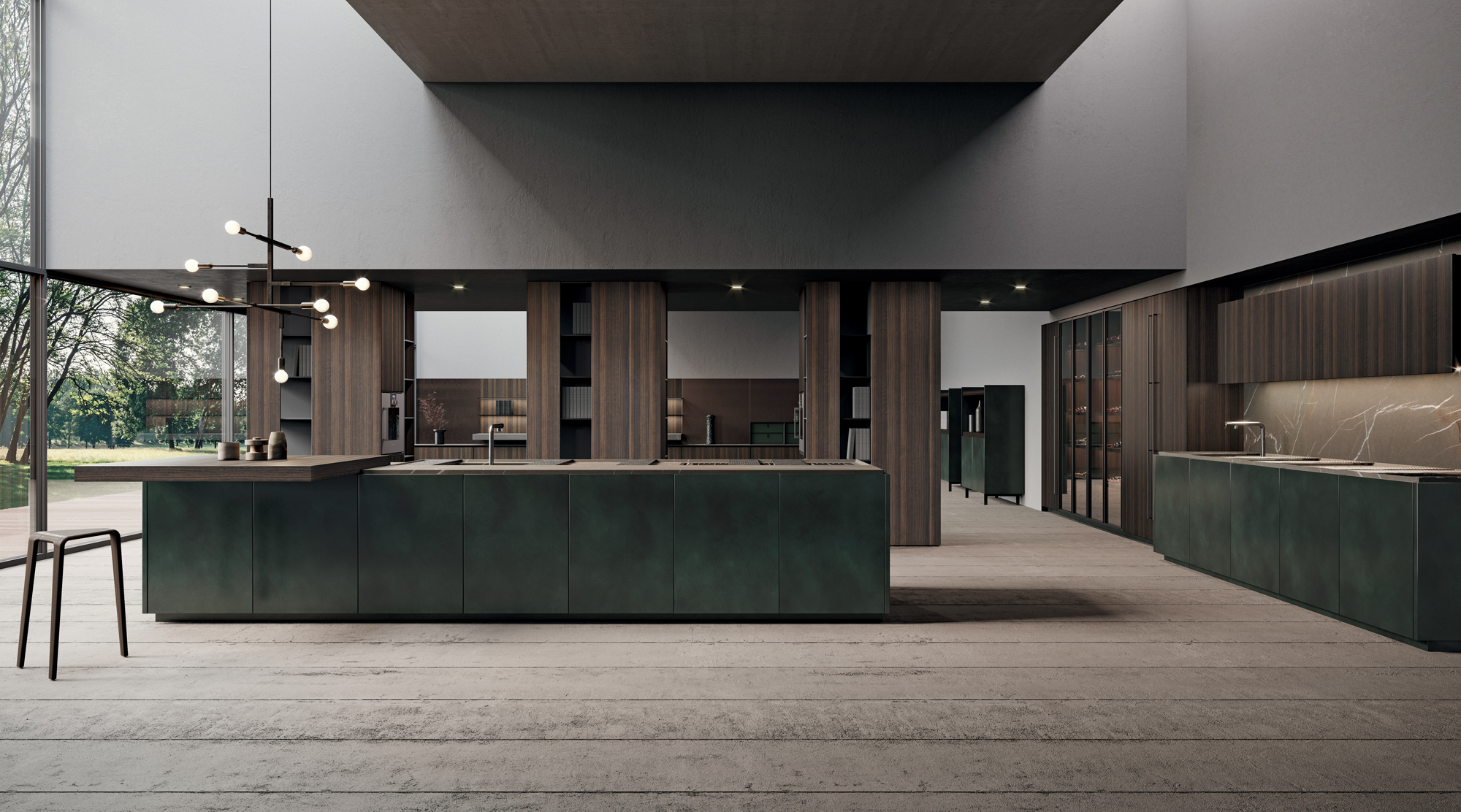
Ever wondered what your dream kitchen might look like if you lived on a desert planet in the far future? While we’re busy selecting the perfect modern kitchen cabinets for our European homes, the inhabitants of Frank Herbert’s Dune universe have their own unique approach to culinary spaces that’s both fascinating and surprisingly practical.
Let’s take a journey from the sleek minimalism of Scandinavian design to the resource-conscious functionality of Arrakis kitchens, exploring how both styles prioritize efficiency – just in very different ways.
The European Foundation: Clean Lines and Smart Storage
Modern European kitchen design has become the gold standard for contemporary homes, and it’s easy to see why. When you walk into a typical modern kitchen, you’re immediately struck by the emphasis on clean lines, functional beauty, and intelligent use of space.
Kitchen and cabinets in European design follow a “less is more” philosophy. Take Scandinavian modern kitchen styles – they’re all about maximizing natural light with white kitchen cabinets that reflect brightness throughout the space. These aren’t just pretty faces either; custom kitchen cabinets from skilled cabinet makers incorporate ingenious storage solutions that would make even the most organized Mentat proud.
German and Italian kitchen cabinet design takes this efficiency to another level. Their modern kitchen units often feature handleless designs where a simple push opens drawers that glide silently on precision hardware. The cost of kitchen cabinets might be higher upfront, but these cabinet builders create pieces built to last generations – much like the ancient technologies preserved in Dune’s universe.
Dune’s Desert Minimalism: Function Over Form
Now, let’s transport ourselves to the harsh desert world of Arrakis. In Herbert’s universe, every drop of water is precious, and this scarcity shapes everything about how kitchens function. Imagine contemporary kitchen cabinets designed not just for storage, but for water reclamation and spice preservation.
In the Dune universe, kitchen units designs would prioritize sealed storage systems to protect against the ever-present sand. Picture black cabinets kitchen made from advanced materials that can withstand extreme temperature fluctuations, with integrated stillsuit connections for water recovery. These modern kitchen cupboards wouldn’t just store dishes – they’d be part of a life-support ecosystem.
The Atreides family kitchen on Caladan might feature wood cabinets kitchen crafted from off-world timber, a luxury that speaks to their noble status. But once they move to Arrakis, those same families would need custom cabinets designed by specialized cabinet builders who understand desert survival. Every surface would need to serve multiple purposes – much like how modern kitchen ideas today focus on multi-functional spaces.
Water: The Ultimate Design Constraint
Here’s where the comparison gets really interesting. While we Europeans might browse a cabinets store looking for the perfect kitchen counter cabinets to complement our modern kitchen design, Dune inhabitants would prioritize water-efficient features above all else.
Their kitchen cabinet ideas would include built-in distillation units, humidity sensors, and specialized compartments for storing water-rich foods. Imagine modern style kitchen cabinets that double as atmospheric water generators, or bath cabinets that recycle gray water back into the kitchen system. The kitchen cabinet prices in the Dune universe would likely reflect these advanced life-support features.
Spice: The Flavor of Power
Of course, we can’t talk about Dune kitchens without mentioning spice – not the kind we keep in our modern kitchen spice racks, but the melange that drives interstellar civilization. Special climate-controlled custom kitchen cabinets would be essential for storing and preparing this precious substance. These wouldn’t be your typical white kitchen storage solutions, but rather sophisticated preservation systems worthy of the most valuable substance in the universe.
Technology Integration: Then and Now
Modern kitchen design today integrates smart appliances, induction cooking, and app-controlled systems. Dune kitchens would take this concept to the extreme with Holtzman effect generators, molecular gastronomy equipment, and AI-assisted meal planning systems that could calculate nutritional needs for interplanetary travel.
The sleek interfaces we see in contemporary kitchen cabinets today would evolve into holographic displays and voice-activated systems that respond to thoughts rather than touch. Imagine kitchen units designs that could synthesize meals from basic proteins and nutrients – the ultimate in space-efficient cooking.
Sustainability: European Eco-Consciousness Meets Desert Survival
Both modern European kitchens and Dune’s imagined spaces share a commitment to sustainability, though for different reasons. European modern kitchen styles embrace eco-friendly materials and energy-efficient appliances because we care about the planet. Dune kitchens embrace similar principles because survival depends on it.
European cabinet makers today are increasingly using sustainably sourced materials and low-VOC finishes. In the Dune universe, cabinet builders would need to use recycled materials and design for endless reuse – waste simply isn’t an option when you’re living on a desert planet where every resource is precious.
The Aesthetic Balance
While functionality rules in both universes, there’s still room for beauty. White kitchen cabinets remain popular in European design because they create a sense of space and cleanliness. In Dune, we might see similar light colors to reflect heat, but with subtle sand-resistant textures and finishes that can handle the harsh environment.
Modern kitchen ideas today often incorporate natural materials like stone and wood alongside sleek metals. Dune kitchens might feature similar contrasts – perhaps rare off-world materials combined with local stone, creating spaces that are both functional and worthy of noble houses.
Making the Choice: What Would You Pick?
So, faced with the choice between a gorgeous Scandinavian modern kitchen with perfect kitchen cabinet design and a high-tech survival kitchen from Arrakis, what would you choose?
The truth is, both styles teach us valuable lessons. European modern kitchen cabinets show us that beauty and function can coexist beautifully, while Dune’s imagined kitchens remind us that the best design solutions often come from working within constraints.
Maybe the perfect kitchen combines both approaches: the clean, minimalist aesthetic of modern kitchen design with the resource-conscious, multi-functional thinking of desert survival. After all, whether you’re dealing with a small European apartment or the water scarcity of a desert planet, smart design is all about making the most of what you have.
The Bottom Line
Whether you’re shopping for kitchen cabinets kitchen cabinets (yes, they really are that important!) or dreaming of futuristic food preparation systems, the key is finding the balance between form and function that works for your life. European modern kitchen styles offer timeless elegance and proven functionality, while Dune’s imagined kitchens push us to think about efficiency and sustainability in entirely new ways.
Who knows? Maybe your next custom cabinets project will be inspired by both the clean lines of Stockholm and the resourcefulness of Sietch Tabr. After all, the best kitchen design – whether in Europe or on Arrakis – is one that serves your needs while inspiring your imagination.
Ready to bring some of that European minimalism (minus the sandworms) into your own space? Start browsing modern kitchen cabinets options that combine style with the kind of smart storage solutions that would make even a Fremen proud.